ES
 EN
 ZH
 FR
 DE
 RU
 JA
 KO
 AR

A gummy candy can be described as soft, chewy, or bouncy, but these words do not always mean the same thing to a buyer and a manufacturer. One buyer may want a softer first bite, while another may want stronger elasticity or a longer-lasting chew. Without clearer definitions, both parties may interpret the same request differently.
Before product development begins, Lechao, a wholesale gummy candy manufacturer from China, suggested that buyers should turn these preferences into observable texture requirements. Reference samples, consistent evaluation criteria, and written approval records help communicate the target more accurately and reduce unnecessary sample revisions.
Why Words Like Soft, Bouncy, and Chewy Are Not Enough
Texture adjectives are useful for introducing a product concept, but they are not precise enough to serve as the only development instructions.
Consider the difference between these requests:
- Softer: Does this mean less resistance when biting, easier breakdown during chewing, or both?
- Bouncier: Should the gummy visibly or noticeably recover after being pressed, or should it simply feel more elastic when bitten?
- Chewier: Should it require more effort to chew, or should the chewing sensation last longer?
- Firmer: Is the buyer asking for a stronger initial bite or a product that holds its shape better?
These characteristics can overlap, but they are not interchangeable. A gummy can have a soft initial bite and still provide a lasting chew. It can also feel firm without having much elasticity.
The first step is therefore to identify the specific part of the eating experience that needs to change rather than relying on a general adjective.
Break Gummy Texture Into Specific Evaluation Dimensions
A practical gummy texture specification should separate the main characteristics buyers can assess when tasting a sample.

Initial Bite and Firmness
Firmness describes the resistance felt when the teeth first bite into the gummy. It is often the most immediate texture characteristic a consumer notices.
When evaluating initial bite, consider:
- How much pressure is needed to bite through the gummy?
- Does it feel soft, moderately firm, or hard?
- Does it break down easily, or does it resist the first bite?
For example, instead of writing “make it softer,” a buyer could specify: “The initial bite should require less resistance than the reference sample.”
This gives the manufacturer a clearer direction for evaluating the next sample.
Elasticity and Bounce
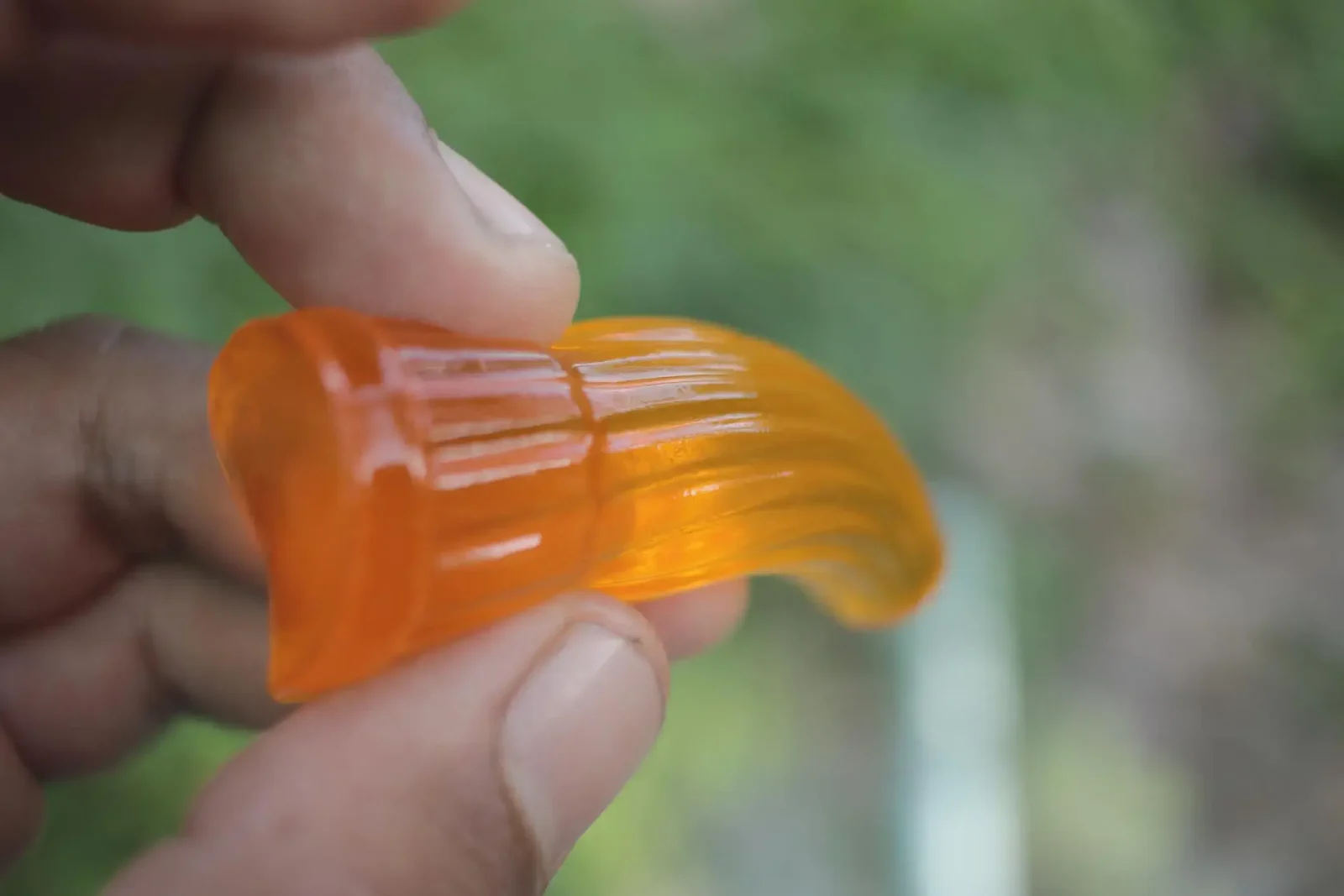
Elasticity refers to how the gummy responds to pressure and whether it recovers after being compressed or stretched. Buyers often describe this characteristic as bounce or springiness.
Consider whether the target product should:
- Have a noticeable elastic response when bitten.
- Recover its shape after light compression.
- Feel resilient rather than easily crushed or deformed.
A useful instruction might be: “Maintain a noticeable elastic bite, but reduce the initial firmness.”
This communicates two separate requirements instead of treating softness and elasticity as the same thing.
Chewiness and Breakdown
Chewiness describes the resistance and sensation experienced during repeated chewing. It is different from the resistance felt during the first bite.
When assessing chewiness, ask:
- Does the gummy require sustained chewing?
- Does it break down quickly or maintain its texture for longer?
- Does the chewing experience feel pleasantly substantial or excessively tough?
For example: “The gummy should have a moderate initial bite and a longer-lasting chew than the reference sample.”
Avoid using “more chewy” without explaining whether you want greater chewing resistance, a longer-lasting texture, or both.
Stickiness and Mouthfeel
Stickiness is another important characteristic because a gummy may have the desired firmness and chewiness but still create an unpleasant eating experience.
Evaluate:
- Whether the gummy adheres noticeably to the teeth.
- Whether it feels excessively sticky during chewing.
- Whether the mouthfeel becomes unpleasant after several bites.
A more useful requirement than “not too sticky” would be: “Minimize adhesion to the teeth during chewing while maintaining the target chewiness.”
The following table can help organize initial feedback:
| Dimensión | Qué hay que evaluar | Example Feedback |
|---|---|---|
| Firmness | Resistance during the first bite | Softer initial bite than the reference |
| Elasticity | Recovery after compression | More noticeable elastic response |
| Textura masticable | Resistance during repeated chewing | Longer-lasting chew |
| Adherencia | Adhesion to teeth and mouth | Less sticky during chewing |
These descriptions are evaluation language, not universal laboratory standards. Any numerical limits or formal test methods should be agreed with the manufacturer for the specific product.
Use Reference Samples to Communicate Your Target Texture
Written descriptions are useful, but physical samples often communicate texture preferences more effectively. A reference sample gives both the buyer and manufacturer something concrete to compare during development.
Choose a Sample That Represents Your Desired Eating Experience
Select a commercial gummy or existing product that is close to the texture you want. If possible, provide a physical sample rather than relying only on a product photograph.
A photograph can show shape, size, and appearance, but it cannot communicate bite resistance, elasticity, or chewiness.
When sending a reference sample, explain what it represents. For example:
- Sample A represents the desired initial softness.
- Sample B represents the preferred elasticity.
- Sample C represents the target chewiness.
You do not need to find one product that matches every requirement. Different samples can represent different texture characteristics.
However, make clear which characteristics are priorities and which are only secondary references. A reference sample should guide development, not imply that its formula can or should be copied directly.
Compare Samples Under the Same Conditions
A comparison is more useful when samples are evaluated consistently.
Try to keep the following conditions similar:
- Sample temperature before tasting.
- Time between opening the package and evaluation.
- Sample size and shape, where practical.
- Evaluation sequence and criteria.
If one sample has been stored differently or exposed to different conditions, its texture may not be directly comparable. Record any obvious differences rather than treating every variation as a formulation issue.
For a development project, ask the evaluation team to use the same criteria for every sample version. This makes feedback easier to compare across revisions.
Explain What Should Match and What Can Be Different
A manufacturer needs to know which characteristics are essential and where adjustments are acceptable.
For example, a buyer may want the new gummy to have the same elasticity as the reference but a softer initial bite and less stickiness.
This is more actionable than saying, “Make it feel like this sample.”
Separate the target into three parts:
- Must match: The texture characteristics that define the product concept.
- Should improve: Characteristics that need adjustment compared with the reference.
- Can vary: Features that are flexible if development constraints require a compromise.
This distinction helps prevent repeated revisions caused by unclear or changing expectations.
Turn Texture Preferences Into Clear Development Requirements
Once the desired texture has been identified, write it as a set of specific instructions.
Avoid relying on short comments such as:
- Make it softer.
- Make it chewier.
- Make it more elastic.
Instead, describe the direction of adjustment and the reference point.
| Vague Request | More Specific Requirement |
|---|---|
| Make it softer | Reduce initial bite resistance compared with the reference sample |
| Make it bouncier | Increase the noticeable elastic response while maintaining moderate firmness |
| Make it chewier | Extend the chewing experience without making the gummy excessively tough |
| Make it less sticky | Reduce adhesion to the teeth during chewing |
These statements do not prescribe a formula. They communicate the intended result so the manufacturer’s product development team can assess possible adjustments.
Set Priorities for Different Texture Attributes
Texture characteristics may involve trade-offs. A product that is softer at the first bite may not automatically deliver the level of firmness or resilience another buyer expects.
For this reason, rank the requirements instead of treating every preference as equally important.
| Prioridad | Example Requirement |
|---|---|
| Must-have | Softer initial bite |
| Important | Noticeable elasticity |
| Adjustable | Slight variation in chew duration |
| Avoid | Excessive stickiness |
The manufacturer can then evaluate whether the requested combination is technically feasible and discuss alternatives if some requirements conflict.
Do not assume that a particular ingredient, formula, or processing adjustment will produce the desired result without product-specific evaluation. The appropriate development approach depends on the product concept and manufacturing conditions.
How to Evaluate and Approve Gummy Samples
Sample approval should be based on the requirements established before development, not simply on whether the latest version feels better than the previous one.
Review Each Sample Against the Same Criteria
Evaluate every version using the same texture dimensions:
- Initial bite and firmness.
- Elasticity and bounce.
- Chewiness and breakdown.
- Stickiness and mouthfeel.
Compare the sample with the reference and record the difference for each dimension. If the initial bite has improved but the gummy has become too sticky, record both observations.
Avoid feedback such as “Version 2 is better.” It does not explain what changed or whether the sample meets the original requirements.
Record Feedback and Sample Changes
Keep a record for every sample version. A simple evaluation sheet can include:
| Record Item | Information |
|---|---|
| Sample ID | Version number or sample code |
| Evaluation Date | Date the sample was reviewed |
| Reference | Product or sample used for comparison |
| Firmness | Observed initial bite |
| Elasticity | Observed bounce or recovery |
| Textura masticable | Chewing resistance and duration |
| Adherencia | Adhesion during chewing |
| Required Adjustment | Specific change requested |
| Approval Status | Approved, revise, or pending |
This record helps the buyer and manufacturer track development decisions. It also reduces the risk of repeating earlier discussions or applying feedback to the wrong sample version.
Confirm the Approved Sample as the Development Reference
Once the sample meets the agreed requirements, identify the approved version clearly.
The written confirmation should include:
- The approved sample ID or version.
- The final texture requirements.
- Any accepted deviations from the original target.
- The date and parties confirming approval.
If the texture specification changes later, record the change and confirm the revised requirements before proceeding. The approved sample and written specification should provide a shared reference for the next stage of the project.
Prepare a Clear Texture Brief for Your Gummy Manufacturer
Before contacting a custom gummy manufacturer, organize your preferences into a short texture brief. It does not need to include technical formulation details. It should explain the eating experience you want and how the development samples will be evaluated.
Use the following checklist as a starting point:
| Artículo | Información que hay que facilitar |
|---|---|
| Reference Sample | Product name, physical sample, or supporting photo |
| Initial Bite | Soft, medium, or firm |
| Elasticity | Low, moderate, or high |
| Textura masticable | Short, moderate, or long-lasting |
| Adherencia | Low, moderate, or high |
| Key Priority | The most important texture characteristic |
| Acceptable Variation | Characteristics that can be adjusted |
| Approval Reference | Confirmed sample version |
These categories are starting points for communication, not standardized grading scales. If the project requires numerical measurements or formal testing, agree on the method and acceptance criteria with the manufacturer before using them.
LeChao’s custom candy development service covers discussions around product requirements, formula and product proposals, sample review, and production after sample approval. Buyers can use this process to communicate their target texture, review development samples, and confirm the product direction before production.
Final Thoughts: Define the Eating Experience Before Development
A useful gummy texture specification does more than describe a product as soft, bouncy, or chewy. It identifies the specific characteristics behind those words, establishes a reference for comparison, and records what both parties have agreed to develop.
Before requesting a sample, define the target initial bite, elasticity, chewiness, and stickiness. Then evaluate each version against the same criteria and keep the approval record.
The clearer the texture requirements are before development, the easier it is for buyers and manufacturers to work toward the same product target.