FR
FR  EN
EN  ZH
ZH  DE
DE  RU
RU  ES
ES  JA
JA  KO
KO  AR
AR 
L'importation de bonbons gélifiés ne se résume pas seulement au choix du bon produit, de la bonne saveur et du bon emballage. Pour les acheteurs internationaux, les documents d'importation constituent également un élément important du processus d'approvisionnement. Des documents manquants ou erronés peuvent entraîner des retards douaniers, des contrôles supplémentaires, des frais de stockage, voire le refus de la livraison.
Pour les importateurs, distributeurs, grossistes et marques de distributeur de confiseries, connaître les documents de base requis pour importer des bonbons gélifiés peut contribuer à faciliter le processus d'achat et à réduire les risques inutiles.
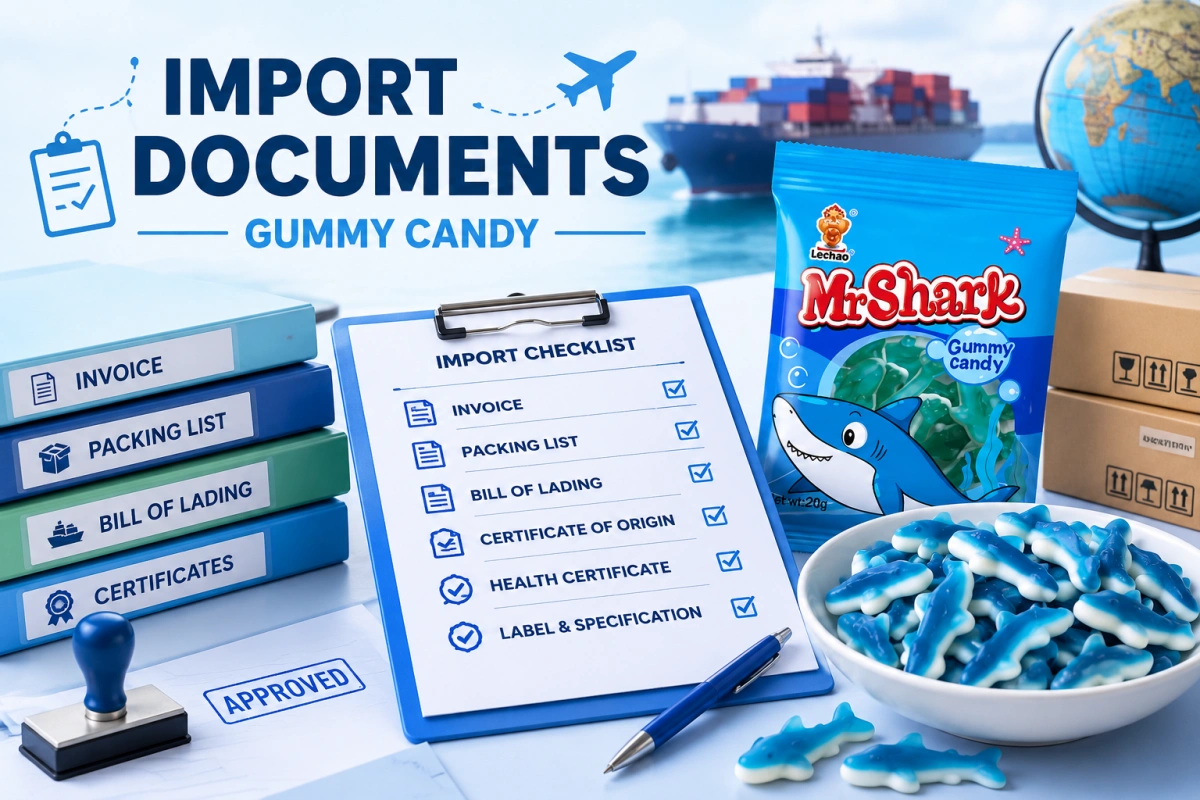
Pourquoi les documents d'importation sont-ils importants pour les bonbons gélifiés ?
Les bonbons gélifiés sont des produits alimentaires ; c'est pourquoi la plupart des pays exigent des importateurs qu'ils fournissent les documents commerciaux, d'expédition, de sécurité alimentaire et relatifs au produit requis avant le dédouanement.
Exigences en matière de dédouanement
Les autorités douanières ont besoin de documents pour vérifier la valeur de l'envoi, la description des produits, le pays d'origine, la quantité, le poids et les informations relatives à la destination.
Si les informations figurant sur la facture, le bordereau d'expédition, le connaissement et l'étiquette du produit ne correspondent pas, l'envoi pourrait être retardé en vue d'un contrôle plus approfondi.
Sécurité alimentaire et conformité
Les bonbons gélifiés étant consommés directement, de nombreux marchés exigent des documents relatifs aux ingrédients, à la sécurité de la production, à l'étiquetage, à la durée de conservation et aux certificats.
Ces documents permettent de prouver que le produit est apte à être importé et commercialisé sur le marché de destination.
1. Facture commerciale
La facture commerciale est l'un des documents les plus importants pour l'importation de bonbons gélifiés.
Ce que cela comprend généralement
Une facture commerciale comprend généralement :
- Informations sur le vendeur et l'acheteur
- Nom et description du produit
- Quantité et prix unitaire
- Valeur totale de l'expédition
- Devise
- Conditions de paiement
- Conditions commerciales
- Pays d'origine
Pourquoi c'est important
Les douanes se basent sur la facture commerciale pour déterminer la valeur des marchandises et calculer les droits de douane, les taxes et les frais d'importation.
Pour les commandes de bonbons gélifiés, la description du produit doit être claire et cohérente ; elle peut par exemple indiquer “ bonbons gélifiés ”, “ bonbons gélifiés en 3D ”, “ bonbons gélifiés fourrés ” ou “ guimauves ”, selon le produit concerné.
2. Liste de colisage
La liste de colisage fournit des informations détaillées sur l'emballage et l'expédition.
Ce que cela comprend généralement
Une liste de colisage peut comprendre :
- Quantité par carton
- Poids net
- Poids brut
- Dimensions du carton
- Quantité de produits par carton
- Volume total
- Marques d'expédition
Pourquoi les acheteurs en ont besoin
La liste de colisage permet aux services douaniers, aux transitaires et aux équipes d'entrepôt de vérifier le contenu physique de l'envoi.
Pour les confiseries, disposer d'informations précises sur les cartons facilite également la planification des opérations d'entrepôt, le chargement des conteneurs et la distribution.
3. Connaissement ou lettre de transport aérien
Le connaissement est utilisé pour le transport maritime, tandis que la lettre de transport aérien est utilisée pour le transport aérien.
Connaissement maritime
Pour les commandes importantes de bonbons gélifiés, on recourt généralement au fret maritime. Le connaissement sert à la fois de document de transport et de preuve d'expédition.
Lettre de transport aérien pour envoi par avion
Pour les échantillons urgents, les petites commandes d'essai ou les projets nécessitant une livraison rapide, le transport aérien peut être utilisé. Dans ce cas, une lettre de transport aérien est fournie par le transporteur.
4. Certificat d'origine
Un certificat d'origine indique le lieu de fabrication des bonbons gélifiés.
Pourquoi cela peut-il être nécessaire ?
Certains pays de destination exigent un certificat d'origine à des fins de dédouanement, de calcul des droits de douane ou dans le cadre d'accords commerciaux.
Ce que les acheteurs doivent vérifier
Les acheteurs doivent s'assurer que l'origine du produit indiquée sur le certificat correspond à celle figurant sur la facture, l'étiquette du produit et les autres documents d'importation.
5. Certificat sanitaire
Pour les produits alimentaires, certains marchés peuvent exiger un certificat sanitaire.
Ce que cela prouve
Ce type de document peut attester que les bonbons gélifiés ont été fabriqués dans des conditions de sécurité alimentaire appropriées et qu'ils sont aptes à l'exportation.
Quand est-ce nécessaire ?
Les exigences varient d'un pays à l'autre. Certains importateurs peuvent avoir besoin de ce document pour le dédouanement, l'enregistrement auprès des autorités sanitaires ou pour répondre aux exigences des distributeurs locaux.
6. Liste des ingrédients
La liste des ingrédients est très importante pour les importations de bonbons gélifiés.
Ce qu'il doit contenir
La liste des ingrédients d'un bonbon gélifié doit indiquer clairement tous les ingrédients principaux, tels que :
- Sucre
- Sirop de glucose
- Gélatine ou pectine
- Arômes
- Colorants
- Régulateurs d'acidité
- Ingrédients pour enrobage
- Ingrédients de la garniture, le cas échéant
Pourquoi est-ce important ?
Les importateurs ont besoin de la liste des ingrédients pour l'examen des étiquettes, les contrôles douaniers, l'enregistrement des denrées alimentaires, la déclaration des allergènes et la conformité aux exigences du marché.
Pour les bonbons gélifiés vendus sous marque de distributeur, les informations relatives aux ingrédients doivent être vérifiées avant la validation des visuels d'emballage.
7. Informations nutritionnelles
De nombreux marchés exigent que les informations nutritionnelles figurent sur les emballages des confiseries vendues au détail.
Produits alimentaires courants
Les informations nutritionnelles peuvent inclure :
- Énergie
- Protéines
- Graisse
- Glucides
- Sucres
- Sodium
Pourquoi les acheteurs devraient s'y prendre à l'avance
Si la mention des informations nutritionnelles est obligatoire sur le marché de destination, les acheteurs doivent vérifier le format, la langue et la méthode de calcul avant d'imprimer les emballages.
Des informations nutritionnelles erronées peuvent entraîner des problèmes d'étiquetage à la réception des marchandises.
8. Fiche technique du produit
Une fiche technique permet aux acheteurs de comprendre les caractéristiques techniques de ces bonbons gélifiés.
Ce que cela peut inclure
Une fiche technique de produit peut comporter les éléments suivants :
- Nom du produit
- Type de bonbon
- Saveur
- Forme
- Couleur
- Taille
- Poids net
- Format de conditionnement
- Durée de conservation
- Conditions de conservation
- Informations sur le carton
Pourquoi est-ce utile ?
Ce document est particulièrement utile pour les importateurs, les grossistes, les supermarchés et les marques de distributeur qui ont besoin de consulter les détails des produits avant de passer des commandes en gros.
9. Déclaration relative à la durée de conservation
Les informations relatives à la durée de conservation sont importantes tant pour les douanes que pour la distribution au détail.
Ce que les acheteurs doivent vérifier
Les acheteurs doivent vérifier :
- Date de production
- Date d'expiration
- Durée de conservation
- Conditions de stockage recommandées
- Format de la date sur l'emballage
Pourquoi les conditions de stockage sont-elles importantes ?
Les bonbons gélifiés sont sensibles à la chaleur et à l'humidité. Des consignes de conservation claires permettent de réduire le risque qu'ils deviennent collants, fondent, s'agglomèrent ou subissent des altérations de texture pendant le transport et la distribution.
10. Informations relatives au graphisme des étiquettes et à l'emballage
Les étiquettes des produits font souvent l'objet d'un contrôle avant l'importation, en particulier pour les bonbons gélifiés prêts à la vente.
Informations importantes figurant sur l'étiquette
L'emballage des bonbons peut devoir comporter :
- Nom du produit
- Poids net
- Liste des ingrédients
- Informations nutritionnelles
- Informations sur les allergènes
- Pays d'origine
- Informations sur le fabricant ou l'importateur
- Date de fabrication et date de péremption
- Consignes de conservation
- Code-barres
- Langue requise par le marché cible
Pourquoi l'examen des étiquettes est-il important ?
Les règles d'étiquetage varient d'un pays à l'autre. Les acheteurs doivent vérifier les exigences locales avant de lancer la production en série et l'impression des emballages.
Cela revêt une importance particulière pour les projets de bonbons gélifiés sous marque de distributeur.
11. Certificats de sécurité alimentaire
Certains acheteurs ou marchés d'importation peuvent exiger du fabricant des certificats relatifs à la sécurité alimentaire.
Documents fréquemment demandés
En fonction du marché et des exigences de l'acheteur, les documents peuvent inclure :
- Certificat HACCP
- Certificat ISO de sécurité alimentaire
- Certificat halal
- Rapport d'audit d'usine
- Rapport d'essai du produit
- Rapport d'essais microbiologiques
Pourquoi ils aident les acheteurs
Ces documents aident les acheteurs à évaluer la fiabilité des fournisseurs, le contrôle de la production et la sécurité des produits.
Sur les marchés musulmans, la certification halal peut revêtir une importance particulière pour les bonbons gélifiés, car la gélatine et d'autres ingrédients peuvent devoir respecter les exigences halal.
12. Rapports d'essais
Les rapports d'essai peuvent être exigés par les importateurs, les détaillants ou les autorités alimentaires locales.
Éléments pouvant faire l'objet d'un contrôle
Pour les bonbons gélifiés, les rapports d'essai peuvent porter sur :
- Sécurité microbiologique
- Métaux lourds
- Additifs
- Colorants
- Produits contenant des allergènes
- Stabilité de conservation
Quand faut-il des rapports d'essai ?
Les exigences en matière de tests dépendent du pays de destination, du type de produit, du canal de distribution et des normes de l'acheteur.
Pour les commandes provenant de supermarchés, de chaînes de magasins ou de grands distributeurs, des contrôles supplémentaires peuvent être exigés avant l'expédition.
13. Autorisation d'importation ou enregistrement des denrées alimentaires
Certains pays exigent que les importateurs demandent des autorisations d'importation de denrées alimentaires ou procèdent à l'enregistrement des produits avant l'expédition.
Généralement pris en charge par l'importateur
Dans de nombreux cas, c'est à l'importateur ou au distributeur local qu'il incombe de demander l'autorisation d'importation des denrées alimentaires dans le pays de destination.
Assistance aux fournisseurs
Un fabricant professionnel de bonbons gélifiés peut aider l'importateur en lui fournissant les caractéristiques techniques des produits, les informations sur les ingrédients, les certificats, les rapports d'essais et tout autre document nécessaire.
Documents que les acheteurs doivent vérifier avant de passer commande
Avant de valider une commande de bonbons gélifiés, les acheteurs doivent vérifier quels sont les documents requis sur leur marché local.
Liste de contrôle recommandée pour les acheteurs
Les acheteurs peuvent établir une liste de contrôle comprenant notamment :
- Facture commerciale
- Liste de colisage
- Connaissement ou lettre de transport aérien
- Certificat d'origine
- Liste des ingrédients
- Informations nutritionnelles
- Fiche technique du produit
- Déclaration relative à la durée de conservation
- Illustration de l'étiquette
- Certificats de sécurité alimentaire
- Rapports d'essai
- Certificat halal, le cas échéant
- Permis d'importation ou immatriculation locale, le cas échéant
Préparer ces documents suffisamment à l'avance peut permettre d'éviter des retards une fois la production terminée.
Problèmes courants liés aux documents lors de l'importation de bonbons gélifiés
De nombreux problèmes d'importation sont dus à de petites erreurs dans les documents.
Noms de produits incohérents
Le nom du produit doit être identique sur la facture, le bordereau d'expédition, le certificat, l'étiquette et les documents d'expédition.
Poids ou quantité incorrects
Le nombre de cartons, le poids net, le poids brut et la quantité de produits doivent correspondre à l'envoi réel.
Informations manquantes sur l'étiquette
Des listes d'ingrédients incomplètes, des informations manquantes concernant l'importateur ou des formulations incorrectes peuvent entraîner des problèmes de conformité douanière ou de conformité aux normes de vente au détail.
Préparation tardive des documents
Si les documents ne sont préparés qu'après l'expédition, les acheteurs risquent de subir des retards lors du dédouanement. Il est préférable de vérifier les exigences en matière de documents avant le lancement de la production.

Comment collaborer plus efficacement avec un fournisseur de bonbons gélifiés
Un fournisseur fiable doit aider les acheteurs à préparer les documents d'exportation essentiels et leur fournir des informations sur les produits de manière claire et en temps utile.
Ce que les acheteurs devraient dire au fournisseur
Avant le lancement de la production, les acheteurs doivent fournir :
- Pays de destination
- Canal de vente cible
- Exigences en matière d'emballage
- Exigences linguistiques relatives aux étiquettes
- Conditions de certification
- Mode de livraison
- Délai de livraison prévu
Ce que le fournisseur doit prendre en charge
Un fabricant professionnel de bonbons gélifiés devrait proposer :
- Confirmation des caractéristiques techniques du produit
- Informations relatives à l'emballage et à l'étiquette
- Informations sur les ingrédients et la valeur nutritionnelle
- Préparation des documents d'exportation
- Contrôle qualité avant expédition
- Coordination logistique
Une bonne communication entre l'acheteur et le fournisseur peut considérablement améliorer l'efficacité des importations.
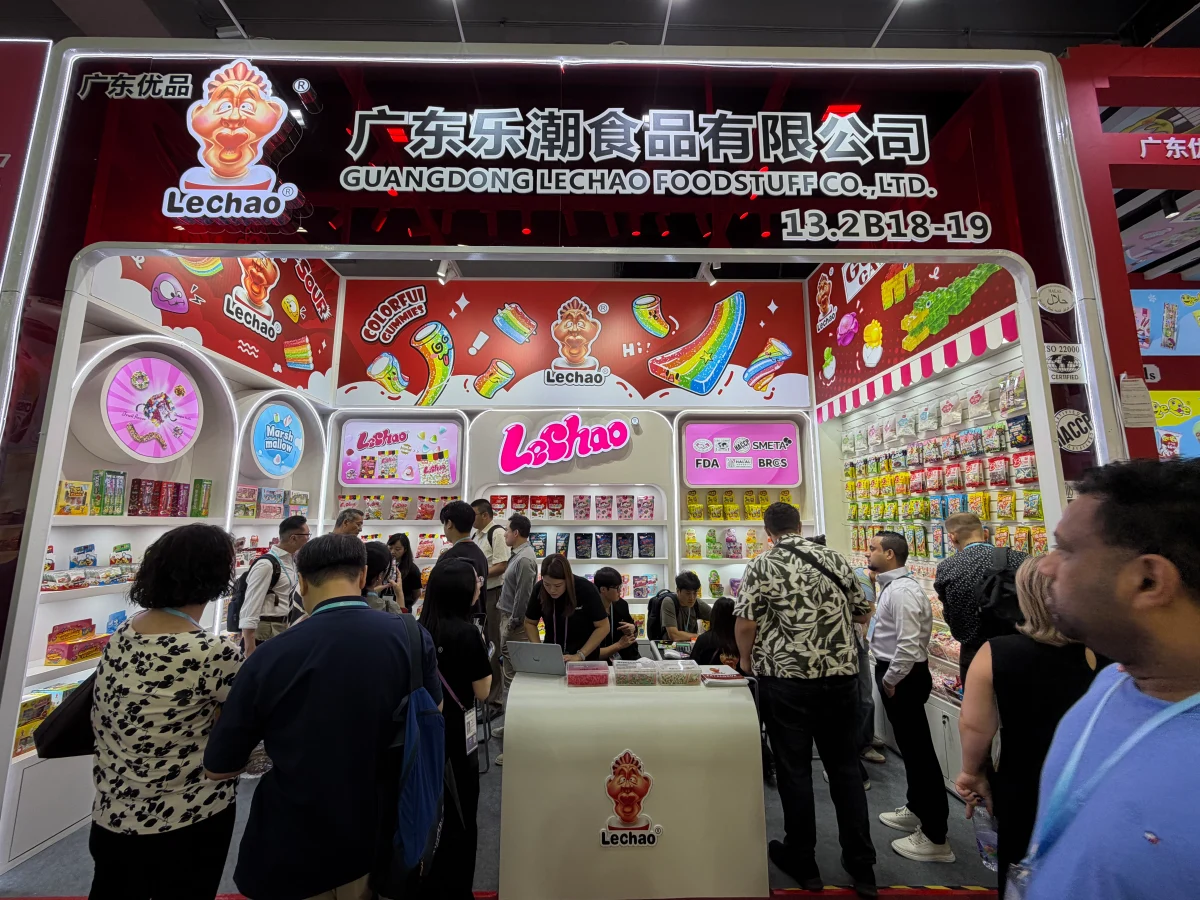
Travailler avec LeChao Candy
LeChao Candy est un fabricant professionnel de bonbons gélifiés fondé en 1991. Nous sommes spécialisés dans la recherche et la fabrication de bonbons gélifiés traditionnels, de bonbons gélifiés 3D/4D, de bonbons gélifiés à enveloppe pelable, de bonbons gélifiés fourrés, de bonbons gélifiés en perles arc-en-ciel, de bonbons à la réglisse, de jelly beans, de guimauves et d’autres confiseries.
Avec plus de 500 moules à bonbons en stock, LeChao Candy propose une large gamme de formes de bonbons très appréciées, destinées aux marques internationales, aux importateurs, aux grossistes et aux projets de marques de distributeur.
Ce que LeChao Candy peut vous apporter
Nous proposons des formules sur mesure, des devis rapides, un contrôle qualité rigoureux, un développement de produits flexible et un soutien logistique mondial afin d'aider nos clients à créer des confiseries stables et prêtes à être commercialisées.
Si vous recherchez un fabricant fiable de bonbons gélifiés pour une collaboration dans le cadre de la vente en gros, de la fabrication en sous-traitance (OEM) ou de la marque de distributeur, LeChao Candy est prêt à vous accompagner dans votre prochain projet lié aux bonbons.