DE
DE  EN
EN  ZH
ZH  FR
FR  RU
RU  ES
ES  JA
JA  KO
KO  AR
AR 
Pectin and gelatin are two common gelling systems used to give gummy candy its structure. They can produce very different eating experiences and behave differently during manufacturing, storage, and distribution.
Pectin gummies are generally associated with a firmer, shorter bite and plant-based positioning, while gelatin gummies are known for their elastic, chewy texture. Neither is universally better. The appropriate choice depends on the desired texture, target consumers, climate, product formulation, and manufacturing requirements.
What Are Pectin Gummies and Gelatin Gummies?
What Is Pectin in Gummy Candy?
Pectin is a plant-derived polysaccharide commonly obtained from fruit materials such as citrus peels and apples. In gummy candy, it acts as a gelling agent and can create a structured texture without using animal-derived gelatin.
LeChao describes pectin as a plant-based option widely used for vegan and vegetarian gummy products.
Pectin systems can be particularly relevant for brands developing gelatin-free or plant-based gummy candy, although the finished product must also meet the relevant requirements for all other ingredients before making a vegan or vegetarian claim.
What Is Gelatin in Gummy Candy?
Gelatin is a protein derived from collagen and is widely used in conventional gummy candy. It creates the familiar elastic, springy, and chewy texture associated with many traditional gummies.
LeChao’s current gummy products specifically use gelatin to produce a soft, chewy texture, and the company lists gelatin among its customization options for gummy products.
Pectin Gummies vs Gelatin Gummies: Key Differences
| Faktor | Pectin Gummies | Gelatin Gummies |
|---|---|---|
| Quelle | Plant-derived | Animal-derived collagen |
| Typical texture | Firm, shorter, cleaner bite | Elastic, chewy, bouncy |
| Vegan suitability | Can support vegan formulations | Not vegan |
| Setting behavior | Depends on pectin type, solids, acidity and formulation | Primarily cooling-driven |
| Heat behavior | Generally better heat tolerance after setting | More sensitive to heat |
| Manufacturing | Requires precise formulation control | Well-established conventional process |
| Typical positioning | Plant-based, gelatin-free, fruit-oriented | Traditional gummy candy |
These are general characteristics rather than guarantees. The final texture and stability depend on the complete recipe, processing conditions, moisture content, packaging, and storage environment.
How Does Texture Differ Between Pectin and Gelatin Gummies?
For most candy buyers, texture is the most noticeable difference.
Pectin Gummy Texture
Pectin can produce a firmer and shorter bite with less elasticity. It tends to break more cleanly during chewing and can provide relatively quick flavor release.
The exact result depends heavily on the pectin system and formulation. Pectin gummies can range from tender to firm rather than having one fixed texture.
This makes pectin useful for fruit-oriented products or brands looking for a texture different from the classic gummy-bear chew.
Gelatin Gummy Texture
Gelatin produces the familiar springy and elastic chew of traditional gummy candy. The gel structure stretches more before breaking, creating the bouncy mouthfeel many consumers associate with gummies.
Gelatin is also thermoreversible: it softens as temperature rises and sets again as it cools. This behavior contributes to its characteristic texture.
Why Texture Matters More Than the Ingredient Name
Consumers do not experience “pectin” or “gelatin” directly. They experience the finished product.
Texture is also influenced by:
- Sugar and syrup composition
- Moisture content
- Acidity
- Gelling-agent concentration
- Cooking conditions
- Setting time
- Product size and shape
- Beschichtung
Therefore, simply switching from gelatin to pectin will not necessarily reproduce the same gummy texture. The formula usually needs to be developed around the selected gelling system.
How Do Pectin and Gelatin Gummies Behave in Heat?
Heat stability becomes particularly important when gummies are transported through hot climates, containers, warehouses, or retail environments.
Gelatin Gummies and Heat
Gelatin gels soften as temperature increases. Consequently, prolonged exposure to high temperatures can cause gelatin gummies to become softer, lose their shape, or stick together.
This does not mean gelatin gummies are unsuitable for international distribution. Packaging, formulation, transportation conditions, and temperature management all matter.
Pectin Gummies and Heat
Pectin-based systems can provide better shape retention under elevated temperatures than conventional gelatin systems, making them worth considering for warm-climate distribution. However, “pectin” should not be treated as a guarantee of heat resistance. The complete formulation still needs to be validated.
LeChao specifically recommends pectin or mixed-matrix formulations for gummy candy intended for Southeast Asian markets, where high temperatures and humidity can create melting, sticking, and deformation problems. Its solution also combines formulation adjustments with anti-sticking coatings and barrier packaging.
For buyers shipping gummies internationally, this makes the gelling system a supply-chain consideration, not simply an ingredient preference.
Pectin vs Gelatin Gummies for Vegan and Vegetarian Products
Pectin has an obvious advantage when a brand wants to develop a plant-based or gelatin-free gummy.
Because gelatin is animal-derived, gelatin gummies cannot be considered vegan. Pectin itself is plant-derived and can support vegan or vegetarian formulations. However, the claim must be assessed across the entire recipe and production process.
Halal and Kosher requirements also require more than simply choosing pectin. The source of every relevant ingredient, processing controls, and applicable certification must be considered.
LeChao currently states that it has developed gelatin-free products using pectin and carrageenan for vegetarian markets and stringent Halal requirements.
How Pectin and Gelatin Affect Gummy Manufacturing
The two gelling systems require different formulation and processing approaches.
Pectin Requires Precise Formulation Control
Pectin gelation depends on the specific pectin type and formulation. Variables such as soluble solids, acidity, pH, and, for certain systems, calcium can affect the setting behavior.
This means the manufacturer needs to control the cooking, acid addition, depositing window, and setting process carefully.
Gelatin Has Different Processing Requirements
Gelatin is hydrated and dissolved under controlled conditions before forming its gel as the mixture cools. Temperature management is particularly important because the resulting gel is thermoreversible.
Gelatin therefore offers the familiar conventional gummy process, but its heat sensitivity remains an important consideration after production.
Pectin and Gelatin Are Not Direct Substitutes
This is an important point for brands developing custom gummies:
A gelatin gummy formula cannot simply be converted to pectin by replacing one ingredient with the other at the same ratio.
Changing the gelling system can affect cooking conditions, acidity, solids, texture, setting, depositing, drying, and final stability. A new or substantially adjusted formulation may be required.
Which Is Better for Different Candy Products?
There is no universal winner. Start with the product you want to sell, then select the gelling system that supports it.
Consider Pectin When You Want:
- Plant-based positioning
- Gelatin-free products
- A firmer or shorter bite
- Fruit-oriented gummy concepts
- Better resistance to certain warm distribution conditions
Consider Gelatin When You Want:
- Traditional gummy texture
- Elastic and bouncy chew
- A familiar gummy-bear experience
- Conventional gummy formulations
- The mouthfeel consumers already associate with classic gummies
When the Market Matters More Than the Ingredient
A practical decision sequence is:
Target consumer → product positioning → desired texture → distribution environment → formulation
For example, a brand targeting vegan consumers in a hot climate may have strong reasons to investigate pectin. A conventional candy brand focused on a classic chewy gummy may prefer gelatin.
The important point is that the ingredient decision should follow the product requirements, not the other way around.
What Should Candy Buyers Discuss With a Gummy Manufacturer?
Before developing a custom gummy, buyers should communicate more than “pectin or gelatin.”
Discuss:
- Desired texture and chew
- Target consumer
- Vegan or vegetarian requirements
- Target market and climate
- Storage and transportation conditions
- Flavor and acidity
- Gummy shape and size
- Coating requirements
- Verpackung
- Expected shelf life
This allows the manufacturer to evaluate the gelling system as part of the complete product.
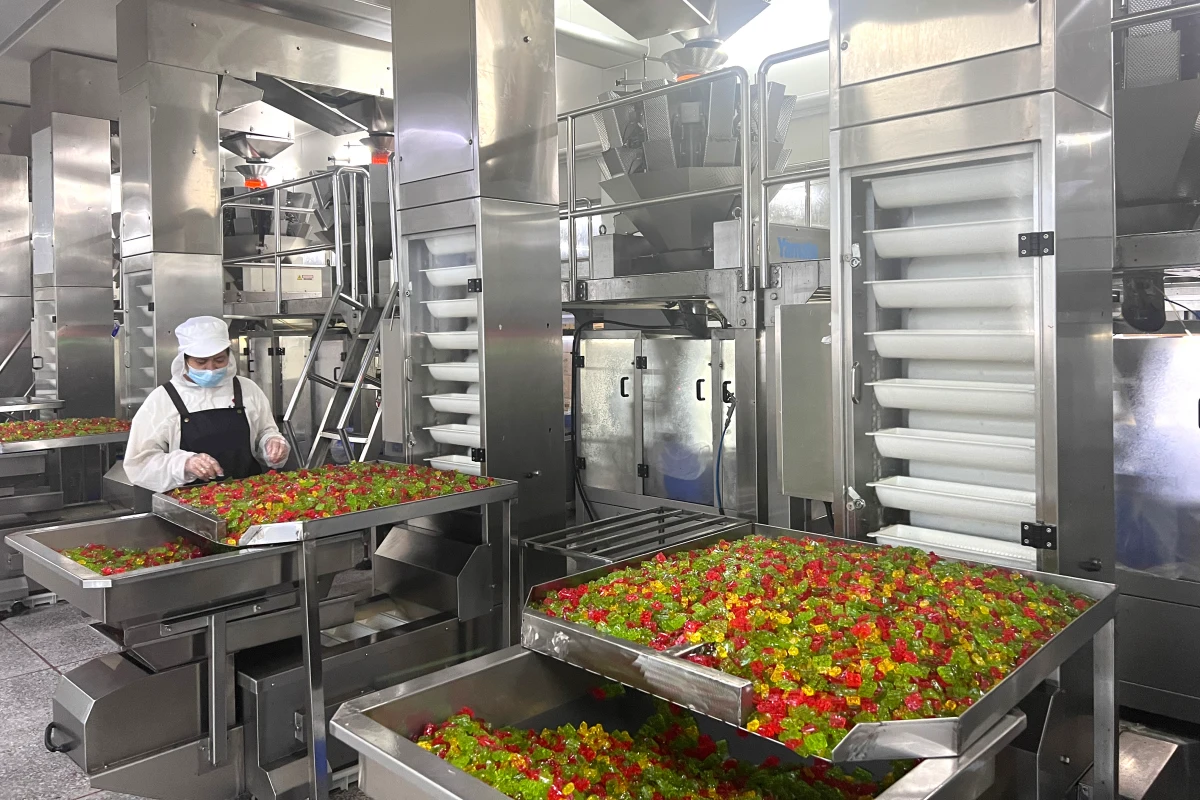
For example, LeChao’s current OEM/ODM gummy services cover customization of flavor, color, shape, gelatin, coating, and packaging, while its gummy development process covers mold development, formulation, sampling, mass production, and packaging.
Pectin Gummies vs Gelatin Gummies: A Practical Decision Guide
| Your Priority | Starting Point |
|---|---|
| Vegan or plant-based positioning | Pektin |
| Gelatin-free product | Pektin |
| Traditional elastic chew | Gelatine |
| Shorter, cleaner bite | Pektin |
| Conventional gummy texture | Gelatine |
| Warm-climate distribution | Evaluate pectin or a suitable mixed system |
| Highly customized product | Discuss formulation with the manufacturer |
The gelling agent should ultimately be selected together with the complete formula, texture target, manufacturing process, packaging, and distribution conditions.
Über LeChao Candy
LeChao Candy has been manufacturing candy since 1991, with experience in developing and producing a wide range of confectionery products for global markets. Its production facility has 500+ existing candy molds, supporting different gummy shapes and product concepts.
For gummy candy, LeChao works with different formulation options, including gelatin-based gummies, pectin gummies, and mixed-matrix formulations. This allows the product formulation to be considered according to the desired texture, dietary positioning, and distribution environment rather than relying on a single gelling system.
LeChao also develops gummy solutions for challenging climates. For Southeast Asian markets, for example, its published approach combines pectin or mixed-matrix formulations with anti-sticking technology, heat-stable colors and flavors, and barrier packaging to help address high temperature and humidity during distribution.
For brands developing customized gummy products, these capabilities allow product requirements such as texture, shape, formulation, flavor, color, and packaging to be considered together during development.