RU
 EN
 ZH
 FR
 DE
 ES
 JA
 KO
 AR

A candy manufacturer’s advertised daily output does not necessarily indicate how much of your order it can complete during peak season.
Existing orders, equipment availability, production bottlenecks, packaging constraints, and material shortages can all affect actual delivery capability.
To assess peak-season candy production capacity, buyers should verify how much production and packaging capacity is available for their specific products within the required order window.
While seasonal candy planning helps determine when to place orders, capacity assessment establishes whether the manufacturer can realistically fulfill them.
What Does Peak-Season Capacity Actually Mean for Your Order?
Candy manufacturing capacity should be evaluated at four levels:
- Nominal capacity: The theoretical output of equipment or production facilities under specified conditions.
- Demonstrated output: The actual production performance achieved under comparable operating conditions.
- Available capacity: The remaining production resources after accounting for existing commitments, maintenance, and other scheduled activities.
- Deliverable capacity: The quantity of finished, packaged, quality-released products that can be made ready for handover within the agreed window.
The distinction matters because high manufacturing output does not necessarily translate into high order availability.
Consider this hypothetical example, assuming all quantities use the same finished-candy weight basis:
| Weekly capacity | Количество |
|---|---|
| Candy molding capacity | 10 metric tons |
| Packaging capacity | 6 metric tons |
| Packaging capacity already allocated | 4 metric tons |
| Remaining packaging capacity | 2 metric tons |
Even with sufficient molding capacity, the manufacturer could pack no more than two additional metric tons that week, assuming no other constraints.
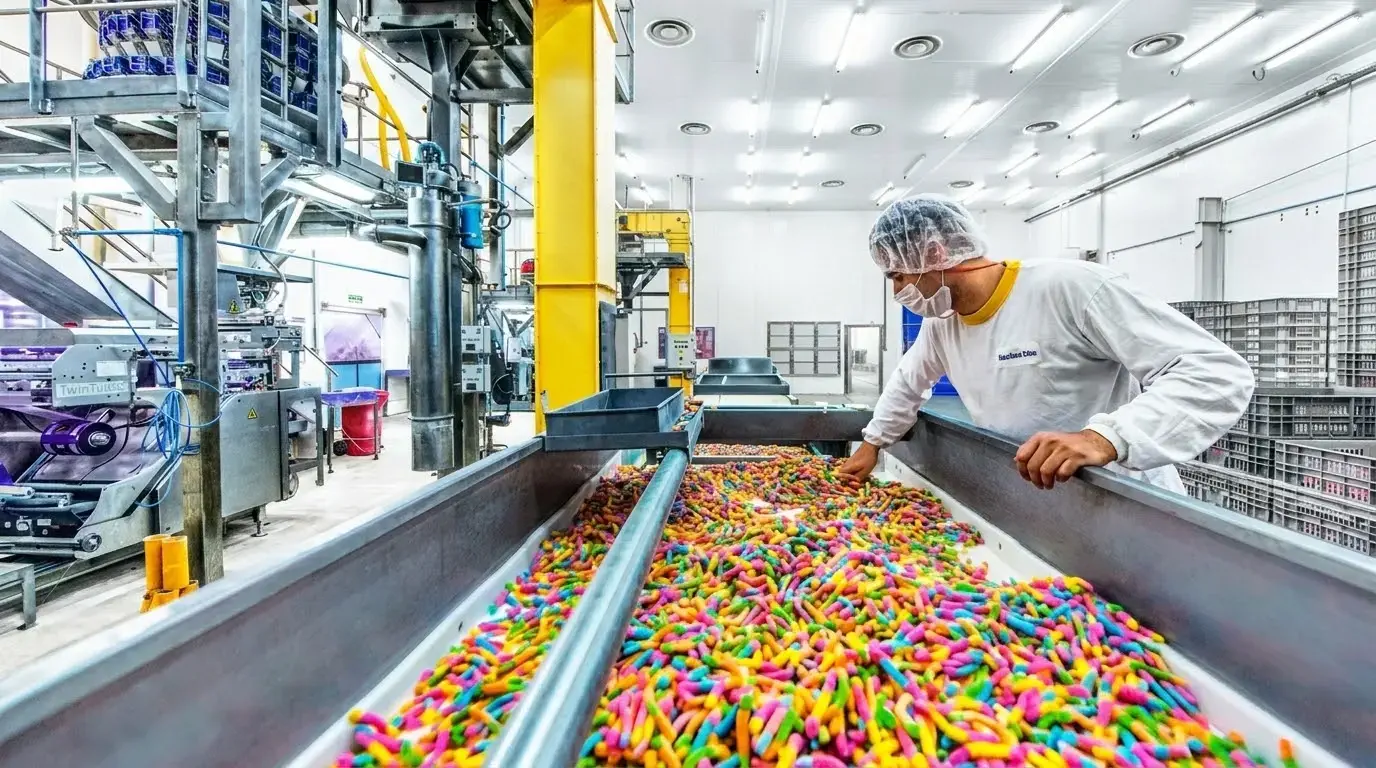
LeChao operates a 74,000 m² factory site with more than 20 production lines and an annual capacity exceeding 30,000 metric tons. These candy manufacturing capabilities establish the scale of its manufacturing operations, while available production capacity must still be confirmed for each order.
Ask for demonstrated output and remaining capacity by SKU, packaging format, and production week rather than relying on factory-wide averages.
Where Can Candy Production Bottlenecks Reduce Throughput?
Actual production output is constrained by the required operation with the lowest effective capacity.
For gummy candy, increasing depositing speed may not improve finished output if cooling, setting, or demolding cannot accommodate the additional volume. Other candy types may have different process limitations.
Production and Finishing Constraints
Understanding the gummy candy manufacturing process helps buyers identify where candy production bottlenecks may occur.
| Production stage | What to verify | Evidence to request |
|---|---|---|
| Cooking and depositing | Effective output for the specified formula | Comparable production records |
| Формовка | Availability of compatible molds | Mold allocation and production plan |
| Cooling or setting | Capacity at the required processing conditions | Process capacity or trial records |
| Demolding and finishing | Ability to handle upstream output | Recent finishing throughput |
| Контроль качества | Inspection, testing, and release readiness | Quality control and release plan |
Changeovers and Operational Losses
Seasonal orders often introduce additional shapes, flavors, colors, or packaging variations. These may require equipment adjustments, mold changes, and cleaning between production runs.
Equipment maintenance, staffing limitations, rejected products, and unplanned interruptions can further reduce effective output.
Buyers should therefore request recent output records for comparable products, including relevant downtime and changeover assumptions. A sustainable production rate is more useful than the highest speed a machine can achieve.
Can Packaging Capacity Match the Production Plan?
Finished candy is not the same as finished retail inventory.
Even when manufacturing is completed on schedule, unavailable packaging materials or occupied packaging equipment can prevent an order from being released for shipment.
Packaging Materials and Artwork Readiness
Before confirming production, verify:
- Approval of packaging artwork and label information.
- Availability of printed films, pouches, jars, labels, and cartons.
- Expected arrival dates for outstanding packaging materials.
- Approval deadlines for customized packaging.
Custom printed materials deserve particular attention because delayed artwork approval or material delivery can affect the entire order.
Packaging Line and Pack-Out Capacity
Candy packaging capacity should be assessed separately for each required format.
A manufacturer may have sufficient capacity for bulk bags but limited availability for retail pouches, individual wrappers, or assorted gift boxes. Differences in filling methods, equipment compatibility, and handling requirements affect packaging throughput.
Ask the manufacturer to confirm the effective packing rate, allocated packaging window, changeover requirements, and final cartoning capacity.
LeChao offers several custom candy packaging options, including bulk packaging, stand-up pouches, jars, single-serve packs, and gift boxes. The suitability and availability of each format should be evaluated against the specific order.
What Evidence Confirms Your Order Is Actually Scheduled?
Production scheduling should connect the required order quantity with available equipment, materials, labor, and packaging resources.
A quotation, estimated lead time, or verbal capacity assurance does not necessarily confirm that production resources have been allocated.
Confirm the Production Window
Request a written allocation summary covering the following information:
| Confirmation item | Required information |
|---|---|
| Product | Approved SKU and specifications |
| Order quantity | Quantity allocated to each production window |
| Production schedule | Planned production week or date range |
| Equipment | Assigned compatible line or production group |
| Упаковка | Allocated packaging window and format |
| Dependencies | Outstanding material, sample, or artwork approvals |
| Quality release | Planned inspection and release arrangements |
| Shipment handover | Expected readiness and agreed handover point |
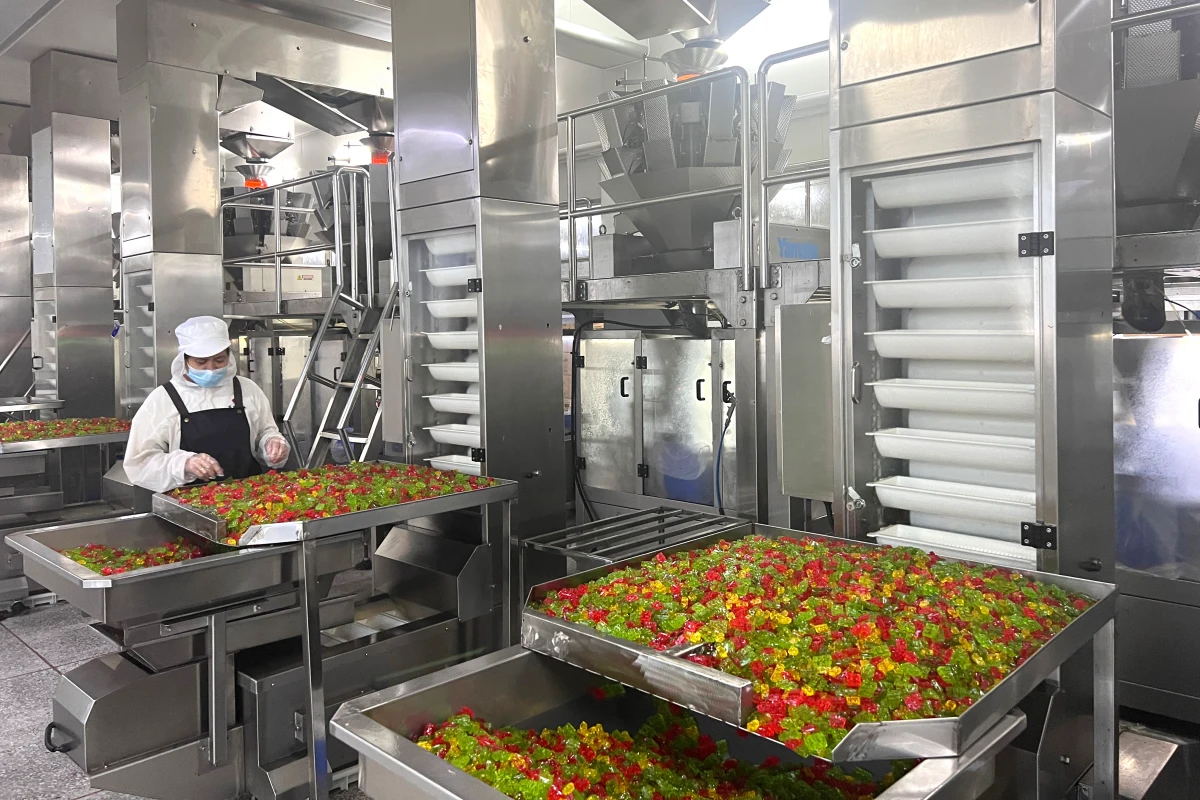
[Visual suggestion 3 — Peak-season order allocation record.]
Check Scheduling Dependencies
A production slot may still depend on material availability, customer approvals, equipment readiness, or other orders being completed.
For effective production capacity verification, distinguish confirmed allocations from provisional reservations.
If an allocation remains conditional, establish who must resolve the outstanding requirement, when it must be completed, and whether the production window could change if the deadline is missed.
Manufacturers may protect other customers’ confidential information by providing an order-specific or anonymized capacity summary instead of their complete production schedule.
What Contingency Plans Protect Peak-Season Delivery?
A credible capacity assessment should also establish how the manufacturer can respond when the original production plan becomes unavailable.
Production Backup
Ask whether alternative equipment, production lines, or additional shifts could support the order.
A backup line is only useful if it has compatible equipment, appropriate molds, trained personnel, suitable quality controls, and sufficient available capacity.
Packaging and Material Backup
Check whether alternative packaging equipment or approved material sources are available if the original arrangements fail.
Any proposed substitute should meet the agreed product and packaging requirements. Changes affecting ingredients, artwork, packaging specifications, or production locations should undergo the appropriate review and approval before implementation.
Delivery Readiness and Escalation
Define what happens if a production milestone is missed.
| Potential disruption | Recovery arrangement to confirm |
|---|---|
| Equipment failure | Compatible backup line or revised production allocation |
| Packaging material delay | Approved alternative material or revised packing schedule |
| Packaging congestion | Alternative packing resources or agreed batch allocation |
| Quality release delay | Investigation, corrective action, and revised release plan |
| Shipment disruption | Revised carrier booking or agreed alternative handover arrangement |
For each risk, identify the responsible person, escalation trigger, recovery action, and revised commitment.
The National Institute of Standards and Technology (NIST) identifies capacity planning, alternative suppliers, and operational flexibility as important elements of supply chain risk management.
Production capacity verification should therefore include both the primary schedule and the practical resources available to recover from disruptions without compromising product quality.
Conclusion: Verify the Order, Not Just the Factory
A reliable peak-season capacity assessment establishes how much compliant, packaged candy can be completed, released, and made ready for shipment within the agreed order window.
Instead of relying solely on daily output, verify available capacity, production bottlenecks, packaging readiness, scheduled allocations, and executable backup arrangements.
If you are preparing a seasonal wholesale or private-label candy order, share your product specifications, SKU quantities, packaging requirements, and target shipment window with LeChao to discuss your production requirements and evaluate order-specific manufacturing feasibility.