Gummy Candy Labeling Requirements, US vs EU Compliance Guide

Learn gummy candy labeling requirements for US FDA and EU markets. Compare allergen rules, nutrition labels, and compliance tips to avoid costly import issues.

What Is Gummy Candy Labeling?

Gummy candy labeling refers to the required information displayed on packaging, including ingredient lists, allergen declarations, nutritional values, and regulatory statements, in compliance with regional food laws.

Gummy Candy Labeling Requirements, US vs EU Compliance Guide-1

For manufacturers and brand owners, accurate labeling is essential not only for legal compliance but also for successful import, retail approval, and consumer transparency.


Why Labeling Compliance Matters in Global Markets

Incorrect or incomplete labeling can result in:

  • Customs clearance delays
  • Product recalls or re-labeling costs
  • Regulatory penalties or market bans

For B2B buyers entering the US or EU, understanding labeling differences is critical to avoiding supply chain disruption.


Key Differences: US vs EU Gummy Candy Labeling

AspectUnited States (FDA)European Union
Core Regulation21 CFR 101Regulation (EU) No 1169/2011
Allergen LabelingSeparate “Contains” statementHighlighted within ingredient list
Nutrition LabelMandatory Nutrition Facts PanelMandatory nutrition declaration table
AdditivesNamed (e.g., Red 40)E-number system (e.g., E102)
Font SizeNo strict minimumMinimum 1.2 mm x-height (0.9 mm for small packs)
Warning StatementsLimitedRequired for certain additives (e.g., Southampton Six)

US Gummy Candy Labeling Requirements (FDA)

Under 21 CFR 101, gummy candy sold in the United States must include:

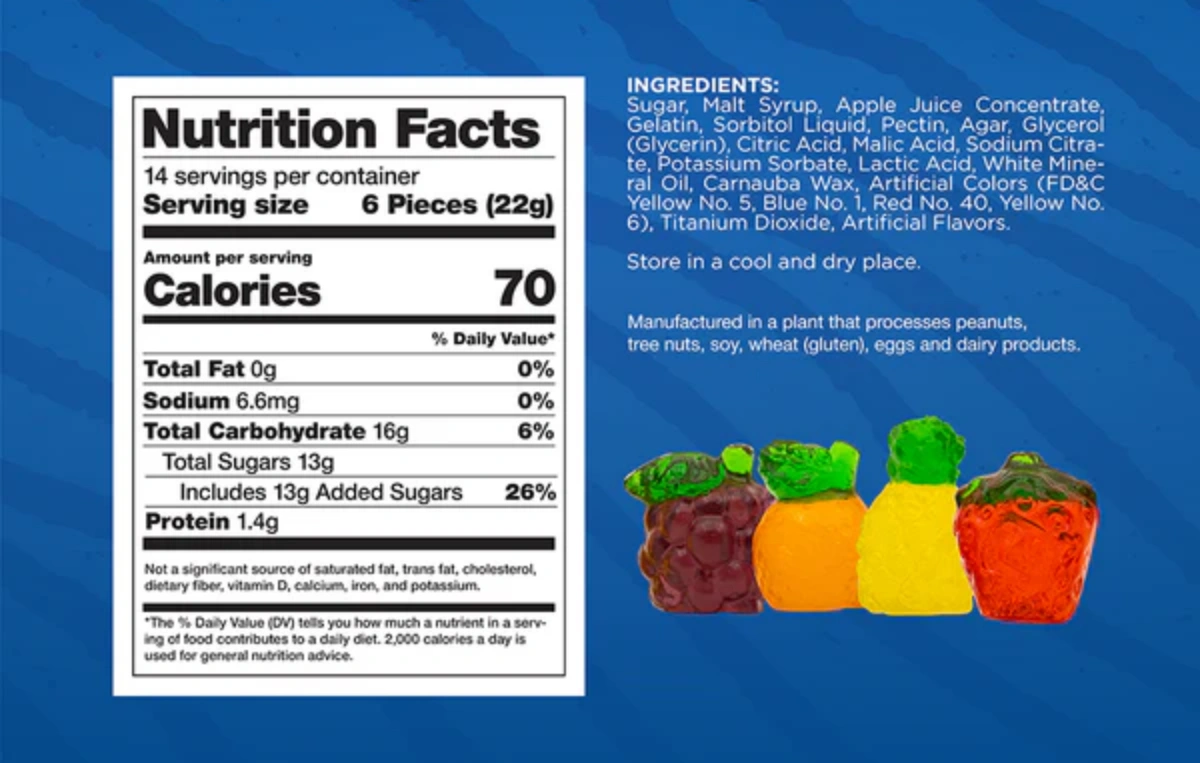
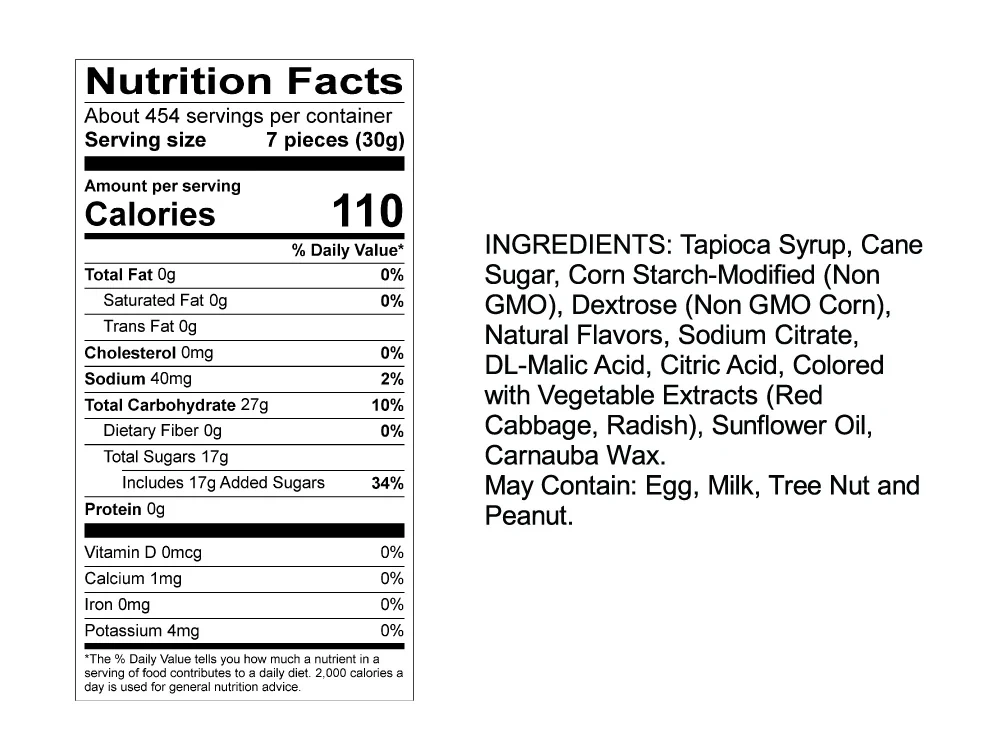
1. Nutrition Facts Panel

  • Includes calories, total sugars, and added sugars
  • Serving sizes based on RACC (Reference Amounts Customarily Consumed)

2. Ingredient List

  • Listed in descending order by weight
  • All additives must be clearly declared

3. Allergen Declaration

  • The 9 major allergens must be disclosed
  • Typically shown in a “Contains” statement

4. Color Additives

  • Artificial colors (e.g., FD&C Red 40) must be listed by name

GRAS (Generally Recognized as Safe) substances must be supported by scientific evidence and may undergo FDA review or voluntary notification.


EU Gummy Candy Labeling Requirements

Under Regulation (EU) No 1169/2011, labeling emphasizes clarity and consumer awareness.

1. Ingredient List and Formatting

  • Ingredients listed in descending order by weight
  • Minimum font size requirements apply (1.2 mm standard)

2. Allergen Highlighting

  • Allergens must be emphasized within the ingredient list
  • Common formats include bold text or capitalization

3. Additives and E-Numbers

  • Food additives must be declared using E-number codes
    (e.g., Tartrazine = E102)

4. Warning Statements

  • Certain artificial colors require warnings such as:
    “may have an adverse effect on activity and attention in children”

5. Packaging & Recycling Information

  • Packaging may require material identification and recycling guidance depending on local directives

Product-Specific Labeling Considerations for Gummies

Different gummy types may introduce additional labeling complexity:

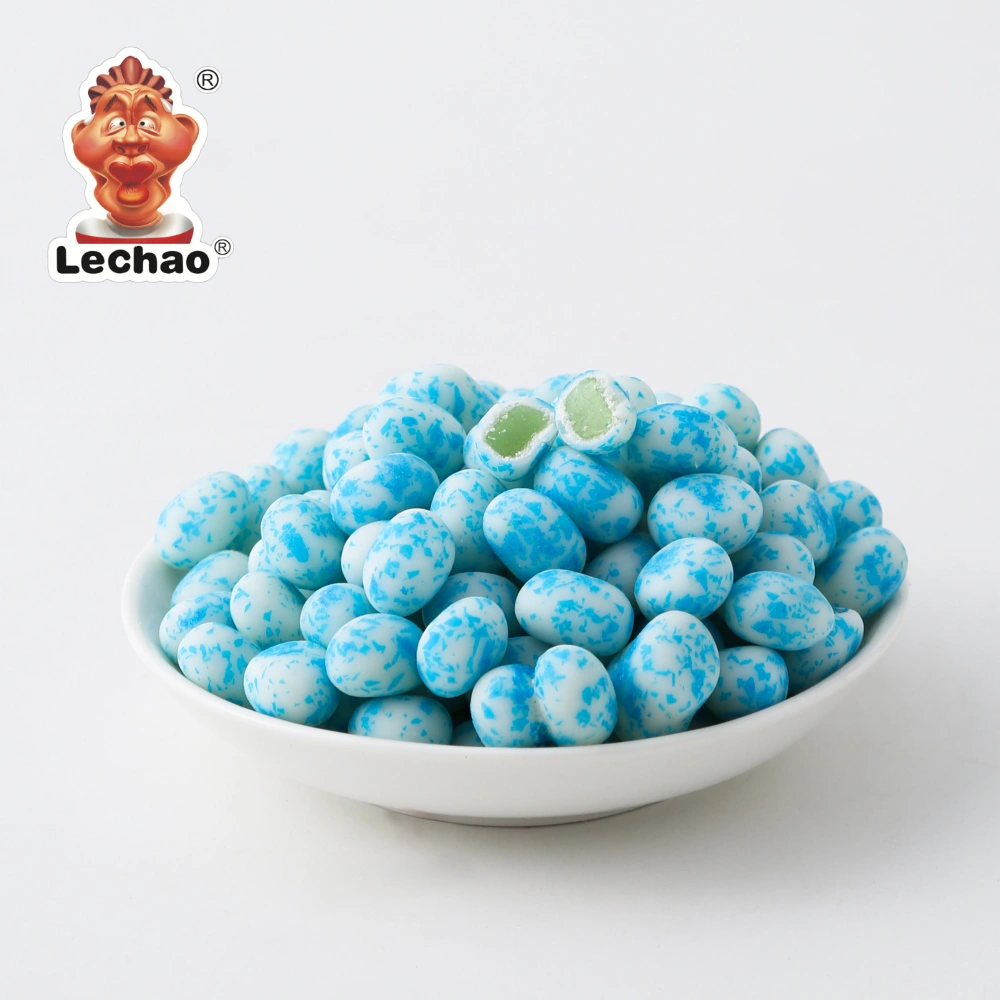
  • Center-filled gummies: May introduce allergen cross-contact risks
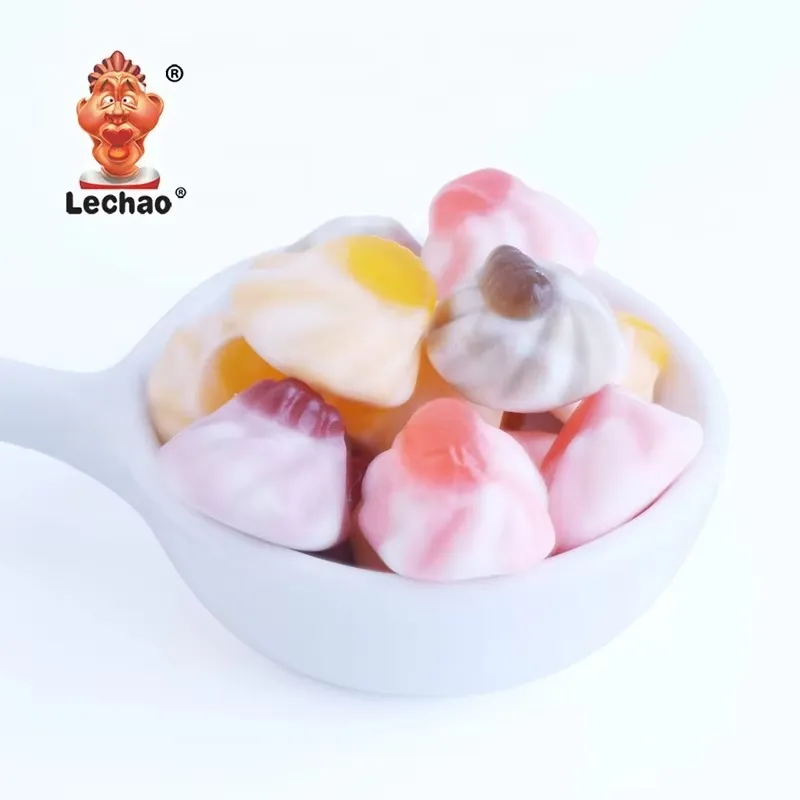
  • Layered or peelable gummies (multi-layer structured products): Require accurate multi-ingredient disclosure
  • Functional or fortified gummies: May require additional claims compliance (e.g., vitamins, reduced sugar)

Common Labeling Mistakes to Avoid

  • Missing allergen declarations
  • Incorrect ingredient order
  • Using non-compliant additive naming (US vs EU mismatch)
  • Illegible font sizes (EU requirement violations)
  • Unsupported product claims (e.g., “natural” without basis)

These errors are among the most common reasons for customs rejection and relabeling costs.


FAQ: Gummy Candy Labeling Compliance

What must be included on a gummy candy label?

A compliant label typically includes ingredient list, allergen information, nutrition facts, net weight, and manufacturer details.

What is the main difference between US and EU allergen labeling?

The US uses a separate “Contains” statement, while the EU requires allergens to be highlighted within the ingredient list.

Are artificial colors regulated differently?

Yes. The US requires color additives to be named (e.g., Red 40), while the EU uses E-number classification (e.g., E102).


From Compliance to Market Entry Efficiency

In practice, gummy candy labeling compliance is not just about regulations—it directly affects:

  • Speed of market entry
  • Approval by retailers and distributors
  • Risk management across international supply chains

Manufacturers with experience in multi-region compliance can significantly reduce these risks.

バルク&リパック市場-2の卸売キャンディー

Work with a Gummy Manufacturer Experienced in US & EU Compliance

レッチョ・キャンディ supports international gummy candy brands by aligning product formulation and labeling requirements with target market regulations.

Support includes:

  • Ingredient and formulation adjustments for compliance
  • Label review covering allergen declarations and formatting
  • Documentation support for export and customs clearance

With over 30 years of manufacturing experience, LeChao helps B2B clients streamline the path from product development to compliant market entry.

Contact the team to request samples, labeling guidance, or a custom gummy quotation.

レッチャオ、業界をリードするグミキャンディ・メーカー

成功を甘くする
ルチャオと

バルクまたはカスタムキャンディソリューションのプレミアム卸売ソフトキャンディーをお探しですか?お問い合わせフォームに必要事項をご記入ください。私たちはあなたの最高のソフトキャンディメーカーになります!
+86-768-6196663[email protected]中華人民共和国広東省広州市荘龍工業区朝安安安区

フォローする

メッセージを送る

成功を甘くする
ルチャオと

バルクまたはカスタムキャンディソリューションのプレミアム卸売ソフトキャンディーをお探しですか?お問い合わせフォームに必要事項をご記入ください。私たちはあなたの最高のソフトキャンディメーカーになります!
+86-768-6196663[email protected]中華人民共和国広東省広州市荘龍工業区朝安安安区

フォローする

メッセージを送る

興味のある人を探す