KO
KO  EN
EN  ZH
ZH  FR
FR  DE
DE  RU
RU  ES
ES  JA
JA  AR
AR 
미국 FDA 및 EU 시장의 구미 사탕 라벨링 요건을 알아보세요. 알레르기 유발 물질 규정, 영양 성분 표기, 규정 준수 팁을 비교하여 막대한 비용이 드는 수입 문제를 예방하세요.
구미 사탕 라벨링이란 무엇인가요?
젤리 사탕 라벨링이란 포장지에 표시되어야 하는 필수 정보를 말하며, 여기에는 다음이 포함됩니다. 성분 표기, 알레르기 유발 물질 표기, 영양 성분 표기 및 규정 관련 표기, 해당 지역의 식품 관련 법규를 준수하여.
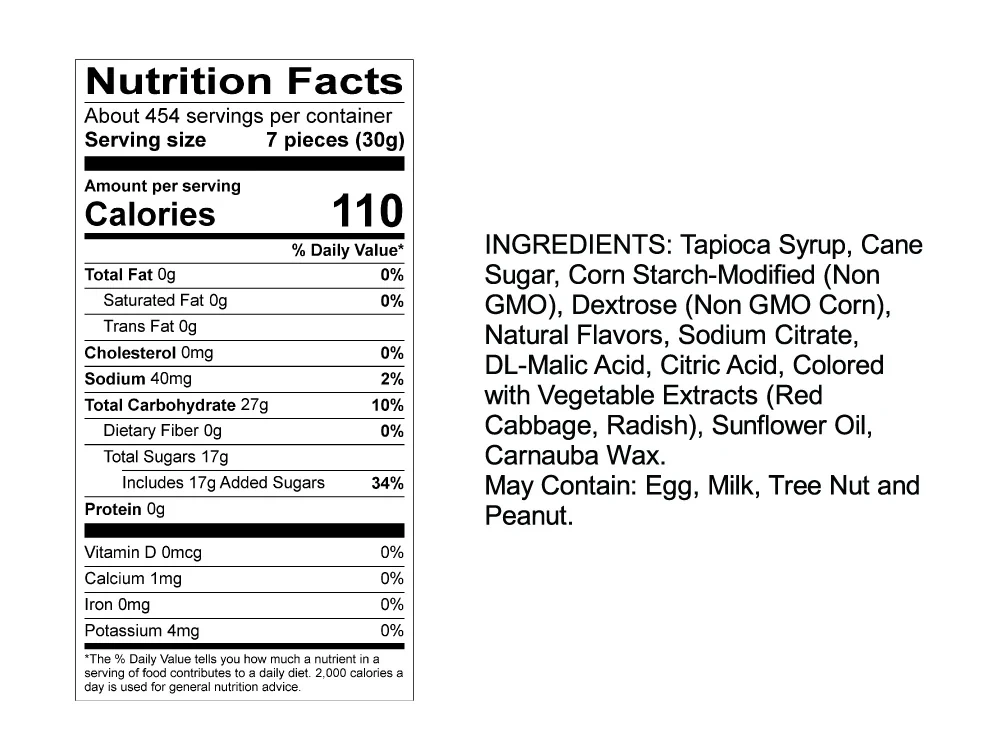
제조업체와 브랜드 소유주에게 있어 정확한 라벨 표기는 법적 규정 준수는 물론, 다음을 위해서도 필수적입니다. 성공적인 수입, 소매 판매 승인 및 소비자 정보 투명성.
글로벌 시장에서 라벨링 규정 준수가 중요한 이유
라벨링이 부정확하거나 불완전할 경우 다음과 같은 결과가 발생할 수 있습니다:
- 통관 지연
- 제품 리콜 또는 라벨 재부착 비용
- 규제상 제재 또는 시장 거래 금지
미국이나 EU 시장에 진출하는 B2B 구매자의 경우, 공급망 차질을 방지하기 위해서는 라벨링의 차이점을 이해하는 것이 매우 중요합니다.
주요 차이점: 미국 대 EU 구미 사탕 라벨 표시 규정
| 양상 | 미국 (FDA) | 유럽 연합 |
|---|---|---|
| 핵심 규정 | 21 CFR 101 | (EU) 규정 제1169/2011호 |
| 알레르기 유발 물질 표시 | 별도의 “Contains” 절 | 성분 목록에서 강조 표시된 부분 |
| 영양 성분 표기 | 필수 영양성분 표 | 필수 영양성분 표 |
| 첨가제 | 명칭 (예: 레드 40) | E-번호 체계 (예: E102) |
| 글자 크기 | 엄격한 최소 기준 없음 | 최소 x-높이 1.2 mm (소형 패키지의 경우 0.9 mm) |
| 경고 문구 | 한정판 | 특정 첨가제(예: 사우샘프턴 식스)에 필수적입니다. |
미국 구미 사탕 표시 요건 (FDA)
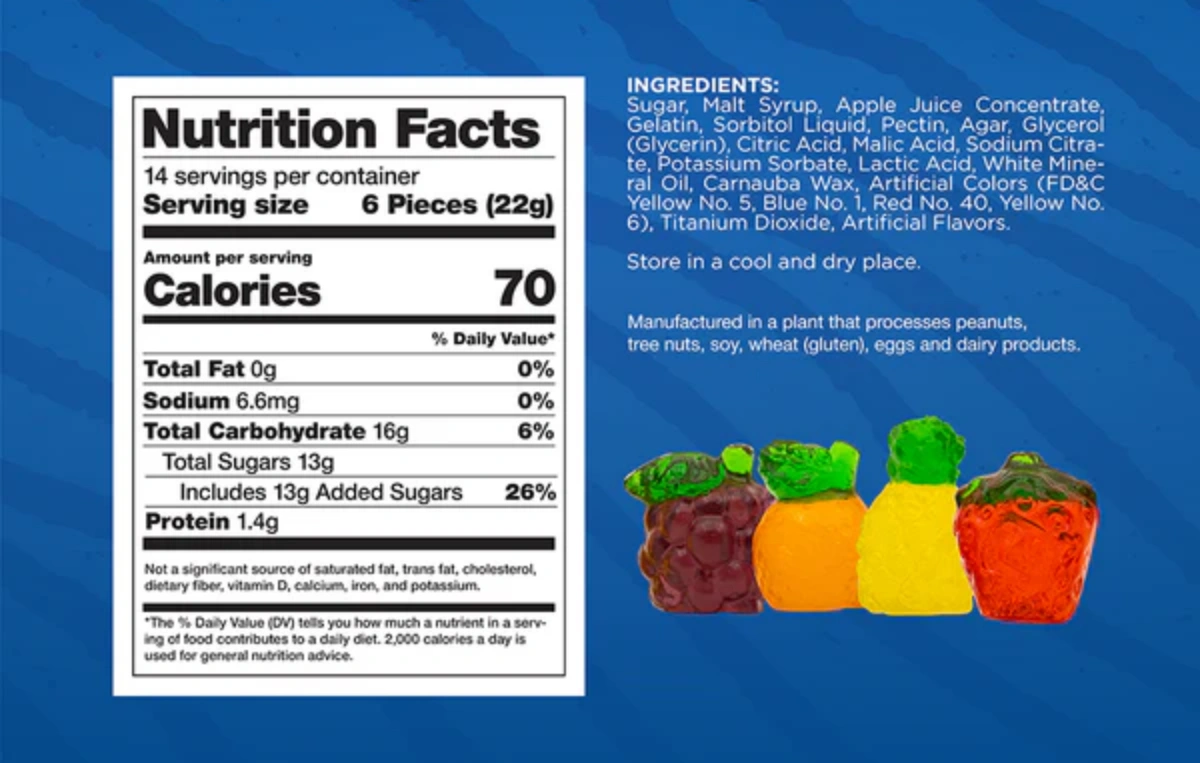
아래 21 CFR 101, 미국에서 판매되는 젤리 사탕에는 다음 성분이 포함되어야 합니다:
1. 영양성분표
- 칼로리, 총 당류 및 첨가 당류
- 1회 제공량은 다음을 기준으로 합니다. RACC (통상적으로 섭취되는 기준량)
2. 성분 목록
- 무게 순서대로 내림차순으로 나열됨
- 모든 첨가물은 명확하게 표시되어야 합니다.
3. 알레르기 유발 물질 표시
- 9가지 주요 알레르기 유발 물질은 반드시 표시해야 합니다
- 일반적으로 ~에 표시되며 “포함” 문
4. 착색제
- 인공 색소(예: FD&C 레드 40)는 명칭을 명시해야 합니다.
GRAS(일반적으로 안전하다고 인정되는) 물질은 과학적 근거를 바탕으로 해야 하며, FDA의 심사를 받거나 자발적 신고 절차를 거칠 수 있습니다.
EU 젤리 사탕 표시 요건
아래 (EU) 규정 제1169/2011호, 라벨 표기는 명확성과 소비자의 인식을 중시합니다.
1. 성분 목록 및 서식
- 성분은 중량 순으로 내림차순으로 기재되어 있습니다.
- 최소 글꼴 크기 요건이 적용됩니다(표준 1.2mm).
2. 알레르기 유발 물질 표시
- 알레르기 유발 물질에 대해서는 특히 강조해야 합니다 성분 목록에서
- 일반적인 형식으로는 굵은 글씨나 대문자 표기 등이 있습니다.
3. 첨가물 및 E-번호
- 식품 첨가물은 다음을 사용하여 표시해야 합니다. E-번호 코드
(예: 타트라진 = E102)
4. 경고 문구
- 일부 인공 색소의 경우 다음과 같은 경고 문구가 필요합니다:
“어린이의 활동량과 주의력에 부정적인 영향을 미칠 수 있다”
5. 포장 및 재활용 정보
- 지역별 지침에 따라 포장재에 재료 표시 및 재활용 안내가 필요할 수 있습니다.
구미젤리에 대한 제품별 라벨링 고려 사항
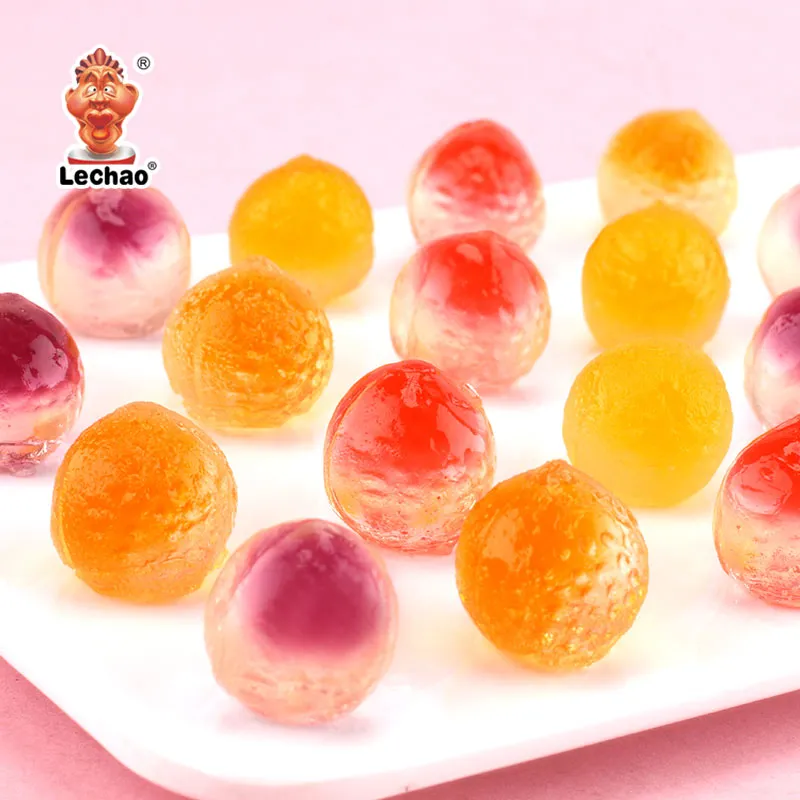
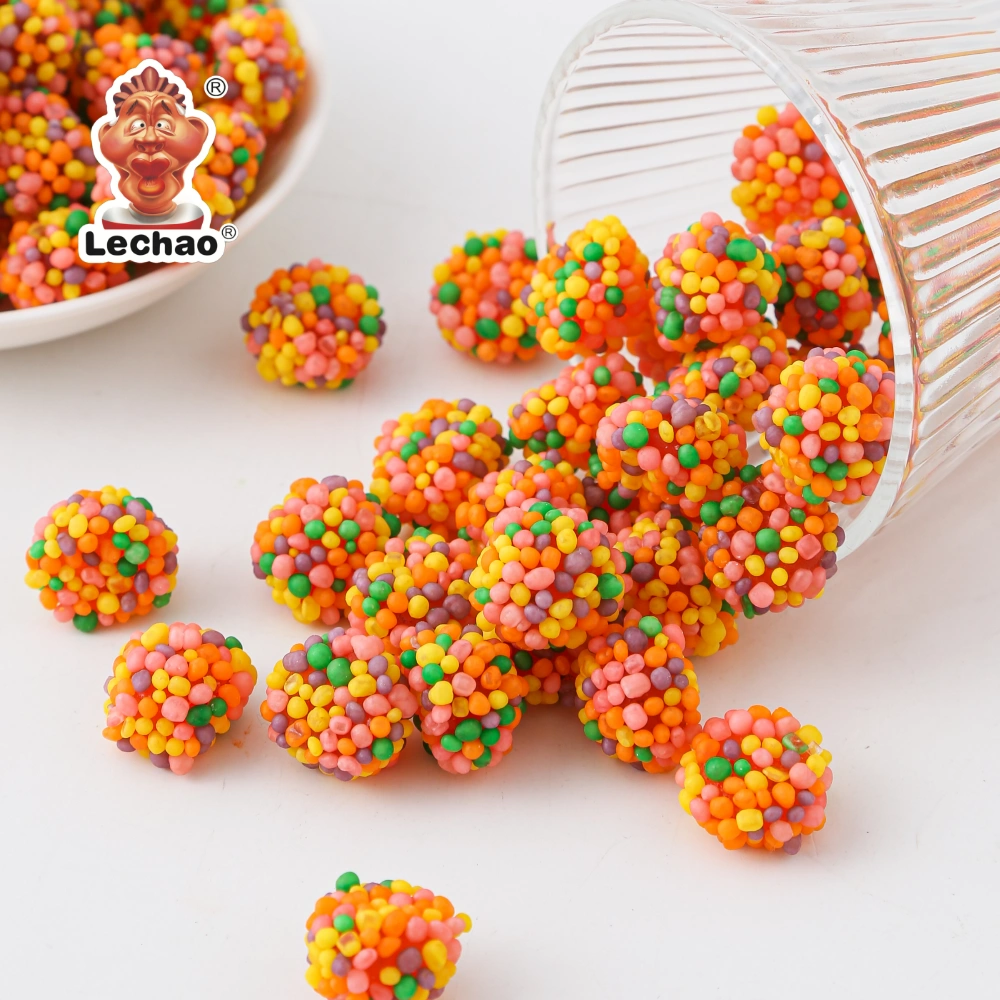
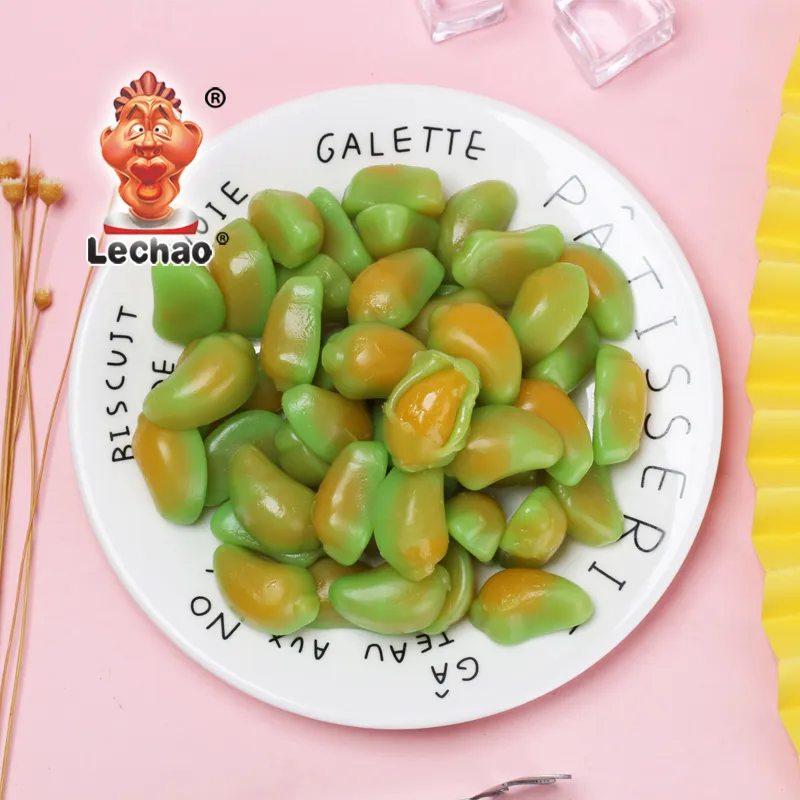
껌미의 종류에 따라 라벨링이 더욱 복잡해질 수 있습니다:
- 가운데가 꽉 찬 구미: 알레르기 유발 물질의 교차 오염 위험이 있을 수 있습니다
- 층이 있거나 껍질을 벗길 수 있는 구미젤리(다층 구조 제품): 여러 성분에 대한 정확한 표시 의무화
- 기능성 또는 영양 강화 구미: 추가적인 표시 규정 준수 사항이 필요할 수 있습니다(예: 비타민, 저당).
피해야 할 흔한 라벨링 실수
- 알레르기 유발 물질 표시 누락
- 재료 순서가 잘못되었습니다
- 규정을 준수하지 않는 첨가제 명칭 사용 (미국과 EU 간 불일치)
- 가독성이 떨어지는 글꼴 크기 (EU 규정 위반)
- 근거 없는 제품 주장 (예: 근거 없이 “천연”이라고 표기하는 경우)
이러한 오류들은 다음의 가장 흔한 원인 중 하나로 꼽히는데, 통관 거부 및 재라벨링 비용.
자주 묻는 질문: 젤리 사탕 라벨링 규정 준수
구미 사탕 라벨에는 어떤 내용을 반드시 기재해야 하나요?
규정을 준수하는 라벨에는 일반적으로 원재료명, 알레르기 유발 물질 정보, 영양성분표, 순중량 및 제조업체 정보가 포함됩니다.
미국과 EU의 알레르기 유발 물질 표시 규정의 주요 차이점은 무엇인가요?
미국은 별도의 “함유 성분” 표기를 사용하는 반면, EU는 알레르기 유발 물질을 성분 목록 내에서 강조 표시하도록 요구하고 있다.
인공 색소는 규제가 다르게 적용되나요?
네. 미국은 착색제를 명칭(예: 레드 40)으로 표기하도록 규정하고 있는 반면, EU는 E-번호 분류 체계(예: E102)를 사용합니다.
규정 준수를 넘어 시장 진출 효율성까지
실제로 구미 사탕의 라벨링 규정 준수는 단순히 규정을 따르는 것 이상의 의미를 지니며, 다음과 같은 측면에 직접적인 영향을 미칩니다:
- 시장 진입 속도
- 소매업체 및 유통업체의 승인
- 국제 공급망 전반에 걸친 리스크 관리
다지역 규정 준수 경험이 있는 제조업체는 이러한 위험을 상당히 줄일 수 있습니다.
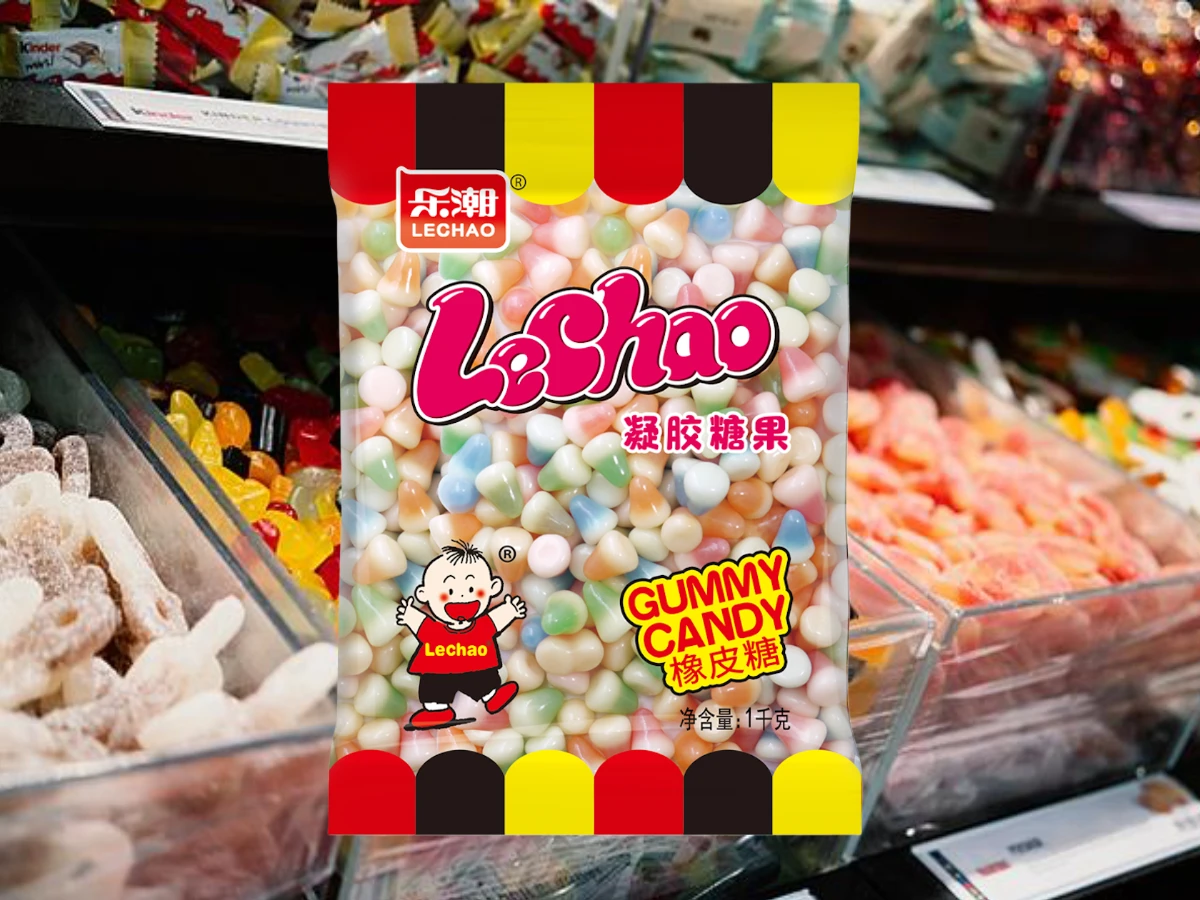
미국 및 EU 규정 준수 경험이 풍부한 젤리 제조업체와 협력하세요
르차오 캔디 제품 제형 및 라벨링 요건을 대상 시장의 규정에 부합하도록 조정함으로써 해외 구미 사탕 브랜드를 지원합니다.
지원 내용:
- 규정 준수를 위한 원료 및 제형 조정
- 알레르기 유발 물질 표기 및 서식 관련 라벨 검토
- 수출 및 통관에 대한 서류 지원
30년 이상의 제조 경험을 바탕으로, LeChao는 B2B 고객사가 제품 개발부터 규정 준수 하에 시장에 진출하기까지의 과정을 효율적으로 진행할 수 있도록 지원합니다.
샘플 요청, 라벨링 안내 또는 맞춤형 구미 사탕 견적을 원하시면 당사 팀에 문의해 주십시오.